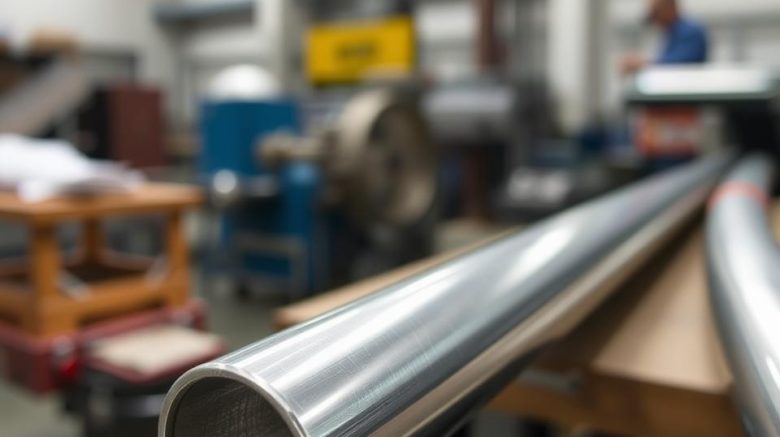
Premium 5/16 Stainless Steel Tubing Supplies
This introduction highlights high-grade 5/16 stainless steel tubing for US-based customers. They demand dependable 5/16 tubing steel for industrial purposes and leisure projects. Well-known names such as CYIWPH, Allstar, and Tynulox actively serve this market with 5/16 stainless steel tubing. Typical product lines feature Type 304 welded coils alongside straight 304 tubes.
Standard offerings usually feature 5/16″ OD with .020 inch wall options. The materials commonly used are grades 304 and 316. Pricing for 304 coils can vary, but 316 is often more limited in stock, which affects long-term project planning.
Companies like Installation Parts Supply specialize in providing industrial and custom tubing solutions. Retailers and Amazon listings show typical packaging and shipping methods. Coils are neatly packed for shipping, and straight lengths come with rapid delivery promises. Details like product weights, parcel sizes, and ASIN references assist buyers on retail sites.
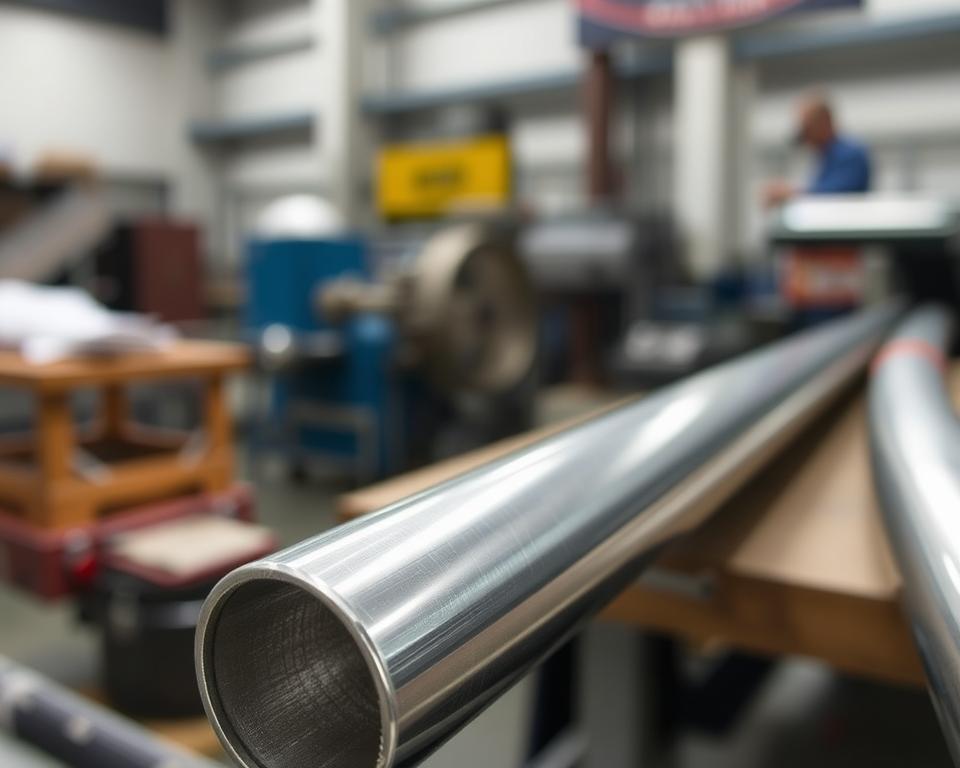
Quick Highlights
- 5/16 Stainless Steel Tubing is available in coiled and straight configurations for flexible application.
- Type 304 is widely stocked; Type 316 can be less available and more expensive.
- Premium 5/16 tubing commonly comes with .020 wall options for industrial-duty tubing.
- Installation Parts Supply provides wholesale and custom tubing solutions in stainless metals.
- Always review product listings for parcel size, weight, and customer feedback prior to purchase.
Reasons to Choose Premium 5/16 Stainless Steel Tubing
From the outset, stainless steel is popular because its corrosion resistance suits a wide range of applications. Common uses span fuel lines, HVAC setups, and marine environments. Buyers typically opt for 304 stainless steel for its general utility. Whenever chloride exposure is a concern, 316 stainless is usually the go-to for its enhanced corrosion behavior.
Stainless steel tubing delivers obvious material benefits. 316 stainless, for instance, is highly resistant to pitting and crevice corrosion, particularly in environments rich in chlorides. Meanwhile, 304 stainless boasts excellent compatibility with welding and machining tasks. This flexibility lets one stainless steel tube serve multiple roles in a project, reducing early replacement concerns.
When it comes to industrial tubing, key benefits include dimensional stability, consistent wall thickness, and resistance to surface damage. Premium 5/16 stainless steel tubing supports reliable, tight-fitting joints. It also reduces leak potential and maintains proper flow through systems.
Investing in superior tubing can significantly reduce maintenance and downtime across a system’s lifespan. While 316 stainless may have a greater upfront cost together with occasional supply constraints, its durability and lower replacement frequency can provide better project economics. Choosing corrosion-resistant tubing at the beginning can trim long-term installation costs.
| Factor | 304 Stainless | 316 Stainless |
|---|---|---|
| Typical use cases | Fuel lines, HVAC, general instrumentation | Marine systems, chloride exposure, harsh chemical environments |
| Corrosion resistance | Suitable for most standard environments | Excellent, particularly under chloride attack |
| Availability for 5/16 size | Widely available in coils and straight tubing | Sometimes limited; can be sold out for specific coils |
| Cost impact | Lower upfront cost | Higher upfront cost but lower replacement needs |
| Best choice when | Projects have moderate exposure and tight budgets | Projects demanding top-tier corrosion resistance |
Specifications and Common Configurations for 5/16 Stainless Steel Tubing
5/16 stainless steel tubing is small in diameter yet versatile, making it ideal for both fluid and structural uses. Its outside diameter of 0.3125 inch is ideal for routing in tight areas. Always verify that tubing specifications align with your system’s pressure, bend radius, and application demands before you buy.
The strength and flexibility of this tubing change according to wall thickness and overall dimensions. You can find wall thicknesses like 0.020 in, 0.028 in, and 0.049 in from suppliers. For Type 304 and Type 316 stainless steel, coiled versions usually feature a 5/16 OD with a .020 wall thickness. Straight lengths are available from 12 to 96 inches.
Coiled tubing is excellent for snaking through tight routes and bends. In contrast, straight lengths are best for stationary runs and structural applications. Coil lengths typically extend to 25 ft and 20 ft, frequently used where simple installation and fewer connections are desired.
Different material grades are suited for various corrosion resistance and fabrication needs. Type 304 stainless steel is common for its corrosion resistance, weldability, and affordability. Type 316 offers better protection against chloride and harsh chemicals, ideal for marine environments or where salt is present.
In supplier catalogs, you’ll find options for both welded and seamless tubing. Online markets frequently carry welded 304 coils. For higher pressure or aesthetic demands, you can purchase seamless round tubing and welded straight lengths. Make your tubing choice by evaluating pressure limits, finish preferences, and forming plans.
Fabricators often point out the slight differences between Type 316 and 304’s machinability. When forming small-diameter tubing, remember that wall thickness influences springback and wrinkle control. Compression fittings and AN/flare adapters are widely used for connecting 5/16 tubing in various systems.
The versatility of this tubing is evident in its numerous applications: including automotive fuel runs, HVAC circuits, and marine plumbing. For food and pharmaceutical projects, ensure the tubing meets required regulatory standards.
| Attribute | Typical Options | Notes |
|---|---|---|
| Outside diameter | 0.3125 in (5/16″) | Common nominal size for compact routing |
| Wall thickness | 0.020, 0.028, 0.049 in | Thinner walls bend easier; thicker walls raise pressure rating |
| Material grades | Type 304, Type 316 | 304 suits general service; 316 suits chloride-heavy or marine service |
| Form factor | Coils (20–25 ft), Straight (12–96 in) | Coils help cut joint count; straight runs work best for rigid layouts |
| Manufacturing | Welded vs seamless tubing | Welded is typical for coils; seamless is favored for high pressure and clean aesthetic |
| Common fittings | Compression, flare, AN adapters | Readily stocked by hardware stores and specialty distributors |
Where to Buy High-Quality 5/16 Tubing and Coil Options
Locating reliable suppliers of 5/16 stainless steel tubing helps streamline projects by guaranteeing precise dimensions and traceable products. Here are tips for bulk buying, identifying retail coil choices, and using a checklist to validate stainless tubing.
Consider wholesale distributor channels for recurring supply needs or specialized custom runs. Installation Parts Supply, located in the U.S., is a prominent distributor offering a broad selection of industrial tubing. They supply cut-to-length tubing as well as coiled and straight products. Purchasing from a wholesaler usually results in better volume discounts, guaranteed material traceability, and excellent customer service for technical specifications and tailored needs.
Retail coil options suit smaller tasks or when you need items quickly. An example is the CYIWPH 5/16″ x 25 ft 304 welded coil available on Amazon, which has earned favorable reviews. Catalogs detail prices for 5/16″ 304 coils starting at $34.99 to $123.99, and 316 coils vary between $46.99 to $149.99, depending on availability. The availability of Type 316 can fluctuate significantly, making regular stock checks important.
Apply this quick checklist to reduce the risk of expensive errors when purchasing stainless tubing:
- Confirm outside diameter (0.3125″) and selected wall thickness (.020, .028, .049).
- Verify welded versus seamless construction for your application.
- Decide between coil length and straight-cut lengths based on handling and installation needs.
- Request mill test reports or material certificates (MTRs) for traceability and grade verification.
- Check OD and wall tolerances, finish, and compatible fittings availability.
- Review shipping and pickup policies; many suppliers ship next business day for orders placed before 3pm.
- Compare pricing by coil length and wall thickness to find the best cost-per-foot.
Suppliers like Metals ‘R’ Us commonly supply MTRs when requested. If your project needs chloride resistance, ensure your supplier has Type 316 in stock. When researching where to buy 5/16 stainless steel tubing, consider wholesale distributors alongside retail coil sources to match cost goals and project timelines.
To avoid regret, make sure you read customer reviews and double-check sizes before you purchase stainless steel tubing. Installation Parts Supply and other notable vendors usually offer guidance on specifications, ensuring the fittings and components you select are compatible with your tubing choice.
Corrosion Resistant Tubing and Material Selection Guidance
Selecting the correct tubing begins with understanding both the application and the operating environment. Corrosion-resistant tubing ensures system integrity in damp, salty, or chemically aggressive conditions. For small-scale projects and specific lines, 5/16 stainless steel tubing is often preferred thanks to its strength and compact size. Selecting the right material minimizes downtime and costs over time.
Choosing between common stainless grades
Grade 304 is widely favored in industrial and internal systems for its good corrosion resistance and lower price. In scenarios involving chloride, seawater, or harsh chemicals, grade 316 is the better choice, because its molybdenum addition helps fight pitting and crevice corrosion. Budget considerations and availability are important — 316 typically costs more and may be harder to find. It’s crucial to weigh the differences between 304 and 316 stainless steel when choosing fittings, particularly for critical uses with 5/16 stainless steel tubing.
Environmental factors that shorten tubing life
Salinity, chlorides, and exposure to chemicals can cause localized forms of corrosion. Corrosion accelerates under high temperatures. Mechanical abrasion and contact with different metals can cause physical wear and galvanic attack. For environments prone to chloride-induced deterioration, 316 is recommended. Effective selection of tubing materials accounts for these factors before installation begins.
Maintenance and preventative measures
Maintenance practices, including regular inspections and cleanings, assist in spotting early corrosion. To minimize damage risks, select compatible fittings and follow proper installation techniques. It’s essential to separate stainless tubing from metals that are not compatible. This can involve using dielectric fittings to avoid galvanic corrosion. In food or pharmaceutical applications, ensure cleanliness and compatibility by requesting mill test reports and checking the surface finish before procurement.
Best practices table for material and upkeep
| Issue | 304 Recommendation | 316 Recommendation | Maintenance Tip |
|---|---|---|---|
| General indoor corrosion | Good performance and cost-effective | Over-specified; use only if needed | Seasonal visual inspection and wipe-down |
| Marine or chloride exposure | At risk of pitting and crevice corrosion | Preferred for pitting resistance | Rinse with fresh water and inspect crevices |
| Chemical contact | Acceptable for mild chemicals | Better for chloride and aggressive agents | Verify chemical compatibility and MTRs |
| Mechanical abrasion or bending | Good ductility for bends | Similar formability; choose based on environment | Use correct bend radii and avoid kinks |
| Sanitary or food/pharma | Often acceptable with polished finish | Preferred for higher hygiene demands | Confirm surface finish and MTRs before use |
Final selection checklist
- Match the grade to exposure: test 304 vs 316 stainless steel for your site.
- Confirm availability for 5/16 stainless steel tubing when ordering long runs.
- Plan maintenance stainless tubing routines: cleaning, inspection, and fitting checks.
- Request mill test reports and verify surface finish for sanitary or high-risk uses.
Custom Tubing Solutions, Fabrication, and Compatibility
Custom tubing solutions significantly impact projects requiring exact fits and traceable materials. Suppliers offer a wide variety of services for 5/16 stainless steel tubing. This includes simple cut-to-length pieces, mandrel-bent shapes, and various end-forming options. These services help minimize site labor and speed up installation for fuel, instrumentation, and hydraulic assemblies.
Cut-to-length tubing offers the fastest way to get installation-ready parts. Common formats include straight 12″ segments and coils. Fabricators like Metals ‘R’ Us, alongside wholesale distributors, provide cutting, flaring, and coiling services. It is crucial to select shops that record exact OD and wall thickness tolerances in their documentation.
Fittings compatibility plays a critical role in achieving long-term reliability. For 5/16 stainless steel tubing, the primary choices are compression and flare fittings. It’s essential to use stainless fittings on stainless tubing to reduce galvanic corrosion risk. Several marketplaces feature a variety of adapters, including AN-to-flare and flare-to-compression, suitable for fuel and instrumentation lines.
When ordering custom tubing, one must be mindful of minimum order quantities and lead times. Companies like Installation Parts Supply publish cutoff times, often around 3 pm, that allow next-day pickup on standard orders. Orders requiring custom specifications or certifications might face longer processing times and likely have minimum order commitments. Be sure to confirm these points, along with shipping and documentation rules, before finalizing any order.
Quality assurance and certification are paramount for regulated projects. A mill test report (MTR) documents the tubing grade and chemical composition for each batch. Documented inspections should reveal if the tubing meets set tolerances for outer diameter and wall thickness. Reliable suppliers supply MTRs on request and maintain the traceability needed for aerospace, medical, or petrochemical sectors.
Summary
Stainless steel tubing measuring 5/16 inches (0.3125″ OD) offers a blend of durability and corrosion resistance, supporting a wide range of projects. You can find common wall thicknesses like .020, .028, and .049 in both 304 and 316 stainless steel types. Based on project demands, you may choose coils or straight pieces and decide between welded and seamless construction.
Engaging a wholesale distributor, such as Installation Parts Supply, offers benefits like access to premium tubing, full material traceability, and ready mill test reports. They also offer tailored tubing solutions like cut-to-length services or coil options. It’s crucial to double-check OD and wall tolerances, grade selection, form (coil or straight), and delivery terms before you buy.
To maximize long-term value and keep maintenance under control, opt for 304 grade for typical industrial use. However, for areas with high chloride presence or marine settings, 316 grade is preferred due to its stronger corrosion resistance. Correct bending, compatible fittings, and periodic inspections for wear all help extend tubing life and keep costs down over the long term.
For buyers in the U.S., it’s wise to look at Installation Parts Supply when you want competitive wholesale pricing and tailored tubing services. Ensure the tubing’s outer diameter of 0.3125″ and the specific wall thickness and grade meet your needs. Ask for mill test reports when required, and choose between coils or straight lengths and the right fittings to suit your job.